Dog feces can contain a large number of bacteria, along with parasites and other germs that may affect both people and animals. The exact amount is not fixed, because it depends on the dog’s health, diet, and exposure to infection. Waste should be picked up promptly, even in a private yard. For homeowners in Pittsburgh, wet weather, snowmelt, and compact urban lots can make the problem spread farther than expected.
Why Dog Poop is More Than Just a Mess
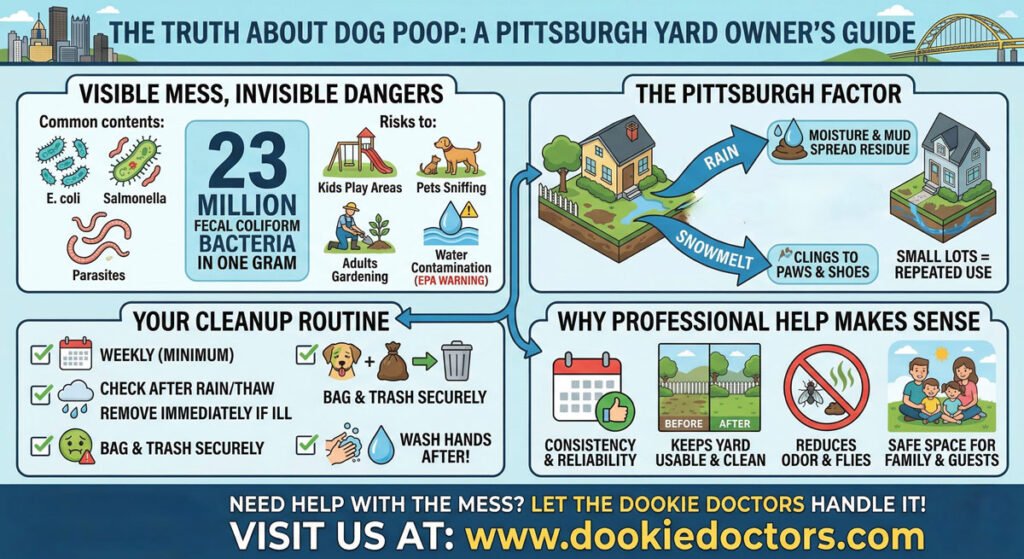
Many people still assume dog waste will break down harmlessly into the lawn. It does break down over time, but that does not make it safe. As it sits, it can leave germs in places where children play, pets sniff, and adults walk or garden. It can also create odor, attract flies, and contribute to bacteria pollution when runoff carries residue toward storm drains and local waterways. The EPA identifies pet waste as a source of nutrient and bacteria pollution in urban areas, which is one reason routine pickup is recommended.
How Much Bacteria is in Dog Poop?
There is no single lab number that applies to every pile in every yard. A healthy dog, a sick dog, a puppy, and an older dog may all shed different organisms in stool. Conditions outside matter too. Heat, moisture, foot traffic, and time on the ground can all affect how waste spreads through a yard.
Even so, one widely cited stormwater estimate states that a single gram of dog waste can contain about 23 million fecal coliform bacteria. That explains why dog poop is treated as a sanitation concern rather than a simple cleanup issue.
What affects how contaminated dog waste can be?
- The dog’s health: Dogs that look fine can still carry germs.
- Parasite exposure: Intestinal parasites may be passed in stool.
- Recent illness: Diarrhea often raises the urgency of cleanup.
- Outdoor conditions: Moisture and traffic can move residue farther.
- Time left in place: The longer it sits, the more chances there are for contact and spread.
What Pittsburgh Yard Owners Should Be Concerned About
Pittsburgh yards often deal with rain, thawing snow, shaded ground, and muddy patches that do not dry quickly. In those conditions, waste does not simply stay where it lands.
Traces can move across grass, collect near walkways, and stick to paws or shoes. Smaller city and suburban lots also mean the same patch of lawn gets repeated use, so one missed week can turn into a much larger cleanup job.
That is why many homeowners start looking for a local poop-scooping company or a dog waste cleanup service in the Pittsburgh area once they realize the yard never really feels clean between pickups.
How Often Should Dog Waste Be Removed?
As soon as possible. Daily pickup is ideal, but many households do not keep up with that pace. For many homes, a weekly visit is a workable minimum. Properties with two or more dogs, small fenced yards, or children using the grass often may need more frequent service. Snow cover can make the situation worse, because waste may be hidden for days and then reappear all at once during a thaw.
A realistic cleanup routine often includes:
- One dependable pickup day each week
- An extra check after heavy rain or melting snow
- Faster removal when a dog has an upset stomach
- Bagging waste securely and putting it in the trash
- Handwashing after any contact with pet feces
For a broader look at cleanup, health concerns, and routine yard care, read our guide, Dog Waste in Your Yard: Everything Pittsburgh Homeowners Need to Know.
When Professional Dog Poop Removal Makes Sense
For many households, hiring a pet waste removal service is less about convenience and more about consistency. Busy schedules, mobility limits, travel, and multi-dog homes can make yard cleanup easy to postpone. Once that happens, the job tends to snowball. Missed waste near fences, under shrubs, or along side yards can linger longer than owners realize.
Regular service can help by:
- Keeping the yard usable week after week
- Reducing buildup in areas dogs return to often
- Cutting down on odor and overlooked spots
- Helping owners keep a cleaner space for children and guests
- Turning an irregular chore into routine property care
For Pittsburgh homeowners, a recurring weekly waste pickup plan often makes sense because local weather already creates enough mess without adding pet waste to the mix.
Keep your yard cleaner, safer, and easier to enjoy with reliable pet waste removal tailored to busy Pittsburgh households. Dookie Doctors provides regular cleanup that helps you stay ahead of odor, buildup, and the mess that comes with missed pickups.
Frequently Asked Questions
1. How much bacteria is in dog poop?
There is no fixed number for every dog, but one often-cited estimate says a single gram can contain about 23 million fecal coliform bacteria. The broader point is more important: dog waste can carry enough bacteria and other germs to justify prompt removal from yards and shared outdoor areas.
2. How to sanitize a yard after dog poop?
Start by removing all solid waste. For hard outdoor surfaces, wash the area and use a disinfectant according to the product label. For grass and soil, removal, drying, and limiting contact are usually more practical than pouring strong chemicals over the lawn. Wash hands after cleanup.
3. Is it okay to leave dog poop in the yard?
No. Experts say it should be picked up even in your own yard. Leaving it in place raises the chance of exposure for pets, children, and anyone tracking residue indoors.
4. Does rain wash dog poop away?
Rain may break it apart and spread the residue, but that is not the same as removing the contamination. Runoff can carry bacteria into nearby drains and waterways.
5. Is weekly service enough for most homes?
For many one-dog homes, yes. Small lots, multiple dogs, or heavy yard use may call for more frequent cleanup.
Final Thoughts
Dog poop is easy to dismiss as a routine pet nuisance, but it carries real sanitation concerns. Leaving it on the lawn can create a problem that spreads farther than many owners expect. A steady cleanup routine, whether handled at home or through a local pet waste service, helps keep the yard cleaner, safer, and easier to enjoy.