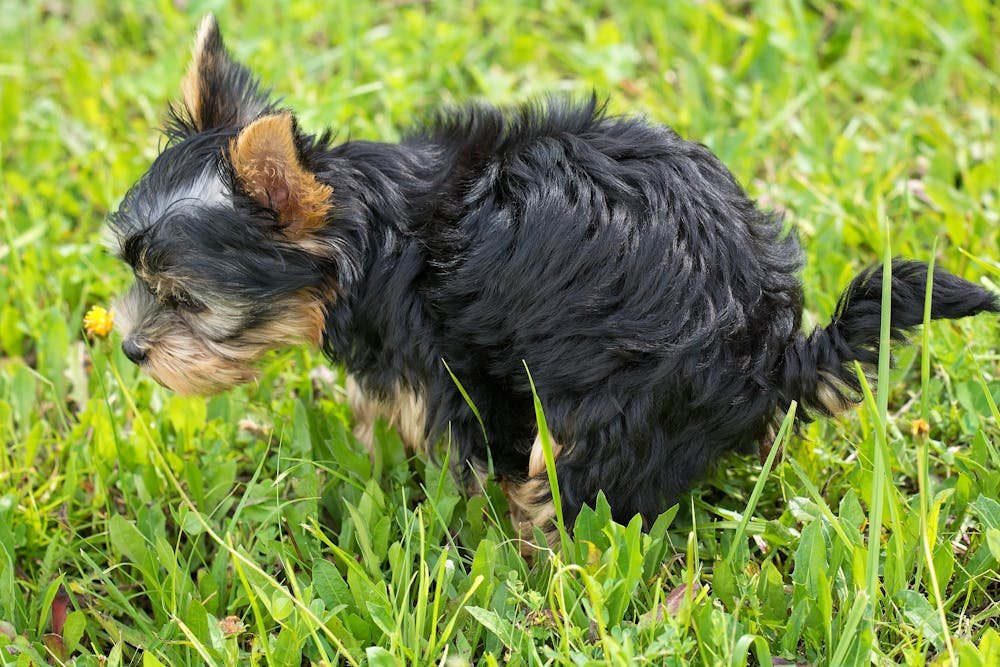
Dog waste in a backyard is more than an eyesore. It can carry germs, add parasite risk, damage grass, and make an outdoor space less safe for children and pets. The CDC advises pet owners to pick up dog poop even in their own yard, especially where children play, and the EPA notes that pet waste can add bacteria, parasites, nitrogen, and phosphorus to the environment when it is not disposed of properly.
Why dog waste is more than just a nuisance
Many homeowners treat dog poop as a minor chore they can handle later. That delay tends to create bigger problems.
- It does not disappear quickly in a healthy, usable lawn.
- It can be tracked indoors on shoes, paws, and lawn tools.
- It can leave the yard smelling unpleasant, especially in warm or wet weather.
- It makes mowing, gardening, and outdoor play less pleasant.
- It adds to runoff concerns when rain moves waste across the yard or toward storm drains.
Dog waste is also different from cow manure or other composted materials people associate with gardening. It is not a safe lawn treatment simply because it is organic. In a residential yard, repeated accumulation creates concentrated contamination, not a balanced soil amendment.
Health risks to your family and pets
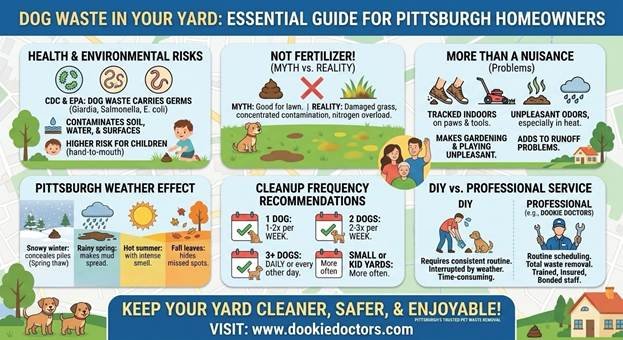
Dog poop can contain bacteria and parasites that affect both people and animals. The CDC says dog poop can carry germs that make people and animals sick, and Giardia can spread through contaminated surfaces, soil, water, or objects.
Key concerns include:
- Bacteria exposure: Waste can contain disease-causing germs. Contact may happen through hands, shoes, toys, or pet paws.
- Parasites: Roundworms, hookworms, and Giardia are common worries for dog owners because contaminated soil and surfaces raise exposure risk.
- Higher risk for children: Kids touch the ground, then their face, snacks, or toys. That simple pattern is why the CDC specifically mentions yards and play areas.
- Risk to dogs: Pets can sniff, step in, or revisit the same contaminated part of the yard, which increases the chance of repeated exposure.
Clean yards are not just about appearance. They reduce contact points.
What dog poop does to your lawn
A common myth is that dog poop acts like fertilizer. In practice, it often does the opposite.
- It can create brown or yellow spots.
- It can leave uneven patches where grass struggles to recover.
- It can overload a small area with nitrogen and other waste compounds.
- It makes routine mowing harder because waste gets smeared or spread.
That is one reason weekly pickup is often recommended for homeowners who want better lawn health. A weekly pet waste removal service will provide you with the best lawn health.
Why Pittsburgh weather makes the problem worse
Pittsburgh homeowners deal with a four-season pattern that changes how pet waste builds up. Here is how that plays out in a backyard:
- Winter: Snow can hide waste, so cleanup gets postponed. Once the snow melts, the yard can reveal weeks of accumulation.
- Spring: Rain and thaw create muddy ground, making waste spread more easily through grass and foot traffic.
- Summer: Heat intensifies odor, and families spend more time outside.
- Fall: Leaves can hide piles, leading to missed spots before winter begins.
For Pittsburgh homes with small fenced yards, that seasonal buildup happens quickly.
How often should you clean your yard?
There is no one schedule for every household, but a practical baseline helps.
- 1 dog: Scoop at least 1 to 2 times per week.
- 2 dogs: Scoop 2 to 3 times per week.
- 3 or more dogs: Scoop every day or every other day.
- Small yards or kid-heavy yards: Clean more often.
- Rainy weeks or snowy periods: Do not wait for a major buildup.
If you know your dog uses the same corner every time, that area needs closer attention. A yard can look mostly clean and still have one highly contaminated section. A professional dog poop removal service can help you out with a better plan.
DIY cleanup vs. hiring a professional service
Some homeowners prefer to do the job themselves, and that can work when the schedule stays consistent.
DIY cleanup can make sense if:
- you have one dog,
- your yard is small,
- you are home often enough to keep up,
- you do not mind handling disposal
DIY becomes harder when:
- bad weather interrupts your routine,
- you have multiple dogs,
- your yard has slopes, leaves, or snow cover,
- family members keep using the space before cleanup happens.
Professional cleanup offers a different benefit. It turns an easy-to-ignore task into a fixed routine. That is where a dog poop removal service appeal to busy homeowners in Pittsburgh. Dookie Doctors offers one-time, weekly, and twice-per-week scoops, removes the waste, and can apply an optional organic yard deodorizer.
What to look for in a pooper scooper service in Pittsburgh
Not all providers are equal. A good pooper scooper service should offer:
- clear pricing,
- recurring and one-time options,
- dependable scheduling,
- waste removal and disposal,
- simple quote process,
- service coverage in your area,
- communication that feels straightforward, not pushy.
For homeowners in Pittsburgh, professional pet waste removal is worth considering when the goal is a yard that stays ready for daily use rather than one that gets “reset” only after it becomes a problem.
How Dookie Doctors helps
Dookie Doctors serves residential customers in the greater Pittsburgh area, offers free estimates, recommends weekly service for lawn health, and positions its work around keeping yards cleaner for families and pets. The company also highlights trained staff, insured and bonded service, and affordable recurring options.
Keep your yard cleaner, safer, and easier to enjoy with help from Dookie Doctors. Get your free quote today and see why Pittsburgh homeowners trust us for reliable pet waste removal.
Frequently Asked Questions:
1) Can dog poop in my yard really make people sick?
Yes. The CDC says dog poop can carry germs that make people and animals sick, and it specifically says pet owners should pick it up even in their own yard. Risk rises when children play outside, when shoes track waste indoors, or when contaminated soil gets on hands and toys.
2) Is dog poop bad for grass?
In most home lawns, yes. It is not a balanced fertilizer. Repeated deposits in the same area can overload the grass, create dead spots, and make mowing unpleasant. Dookie Doctors even recommends weekly service partly for lawn health, which matches the practical experience many homeowners have.
3) How often should a Pittsburgh homeowner schedule cleanup?
A once-a-week schedule is a solid starting point for one dog, but many homes need more than that. Two dogs often mean two or three cleanups a week. Three or more dogs may require near-daily attention, especially in small fenced yards or during wet spring weather.
4) Does snow or rain take care of dog waste?
No. Snow usually hides waste, which is why many yards look worse at thaw. Rain can spread contamination through the lawn or toward runoff pathways rather than solve the problem. Pittsburgh’s seasonal mix of snow, rain, and freeze-thaw cycles makes regular pickup more important, not less.
5) How should dog waste be disposed of after cleanup?
Dog waste should be bagged securely and placed in the trash unless your local municipality allows another approved method. It should not be left on the ground, washed into storm drains, or added to regular home compost. Proper disposal helps reduce odor, contamination, and the spread of bacteria and parasites.
About: Dookie Doctors is a local pet waste removal company serving homeowners in the greater Pittsburgh area with one-time, weekly, and twice-weekly cleanup options. The company also offers free estimates and focuses on helping families keep their yards cleaner, more sanitary, and easier to enjoy year-round.