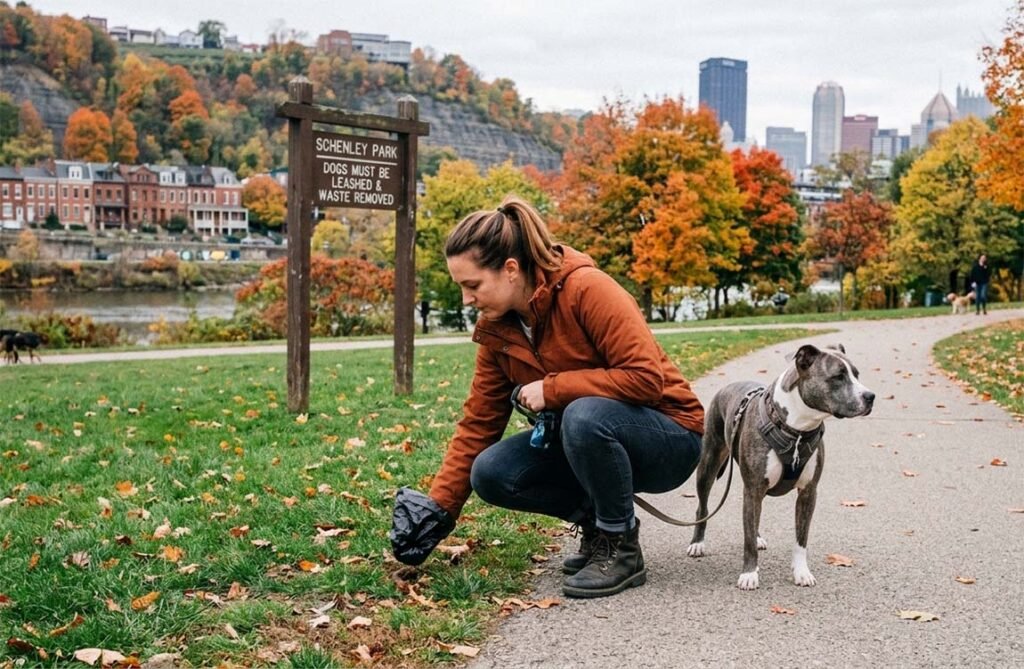
A dog relieving itself during a walk can become a city-code issue in Pittsburgh if the waste is left behind. The city treats animal feces on property other than the owner’s as a nuisance, while allowing the problem to be corrected when the person handling the animal removes the feces immediately and disposes of it in a sanitary way.
Pittsburgh’s rules cover more than waste left on another property. They also address offensive odors and unsanitary conditions caused by animals. Those provisions apply differently depending on where the waste is located and whether it is cleaned up.
What Pittsburgh Actually Calls an Animal Nuisance
Pittsburgh’s animal code addresses several nuisance behaviors, including excessive noise, offensive odors, unsanitary conditions, digging, scratching, and defecating on property other than the property of the animal’s owner or handler.
For dog waste specifically, Pittsburgh’s animal nuisance ordinance says that an animal defecating on school grounds, a city park, other public property, or private property belonging to someone else can constitute a nuisance. The ordinance also says this type of nuisance is considered abated when the person in control of the animal immediately removes all feces and disposes of it in a sanitary manner.
The code uses “immediately,” so carrying bags and removing the waste at the time it is deposited is the clearest way to follow the rule.
Someone Else’s Yard, Public Property, and Shared Outdoor Space
If your dog relieves itself on a neighbor’s lawn or another privately owned area, leaving the feces behind can fall under the nuisance provision.
Public property is covered too. School grounds, city parks, and other public property are named in the ordinance. Picking up immediately addresses the feces-related nuisance described by the code, though separate rules may apply at a particular park or facility.
Shared residential areas can be more complicated. An apartment courtyard, condominium lawn, or HOA green space may be privately owned while serving many residents. City law is only one layer. A lease, pet addendum, condominium rule, or association policy may set stricter cleanup requirements or designate pet-relief areas.
For communities dealing with repeated buildup, commercial pet waste removal can keep common areas on a regular cleaning schedule while management handles resident rules separately.
What About Dog Waste in Your Own Yard?
The provision covering defecation on other people’s property does not say that every pile of dog waste in an owner’s own yard automatically creates a violation. Pittsburgh’s code addresses the owner’s property differently.
The broader nuisance language prohibits keeping an animal in a way that creates offensive odors or unsanitary conditions that become a menace to the health, comfort, or safety of the public. For a private yard, the issue can become accumulation, odor, and the overall condition of the property.
The ordinance does not provide a simple number of piles or a fixed number of days that automatically turns a yard into a nuisance. Regular cleanup prevents waste from reaching the point where neighbors are dealing with persistent odor or visibly unsanitary conditions.
Homeowners who do not want that chore building up can use a pet waste removal service for recurring yard cleanup.
Apartments and HOAs Can Set Their Own Rules
A resident can comply with Pittsburgh’s city ordinance and still violate a private community rule. Apartment operators and HOAs may regulate where dogs can relieve themselves, how quickly owners must clean up, how waste is disposed of, and which common areas are restricted.
Those requirements come from leases, pet agreements, governing documents, or community rules rather than the city nuisance provision. During a complaint, management should identify which rule applies before treating every waste issue as a city-code matter.
HOA boards may also need to address the property itself. Poorly placed bag stations, overflowing bins, and heavily used pet areas can keep producing complaints even when most residents cooperate. Our guide to pet waste removal for HOAs in Pittsburgh can help boards separate cleanup logistics from resident enforcement.
When the Same Waste Problem Keeps Happening
One missed pile and persistent accumulation call for different responses. If waste repeatedly appears on the same property, document the dates and locations. Photos can help establish a pattern in apartment or HOA common areas where several dogs use the same space.
Property managers should also check whether the problem is concentrated near one building exit, pet station, dog run, or walking route. The complaint may point to a service-frequency or station-placement problem alongside resident behavior.
For homeowners who want their own property kept clear, recurring dog poop removal in Pittsburgh can prevent a routine chore from becoming a backlog after rain, travel, illness, or a busy week.
Frequently Asked Questions
Is it illegal for my dog to poop on someone else’s lawn in Pittsburgh if I pick it up immediately?
Pittsburgh treats defecation on property other than the owner’s as a nuisance, but the feces-related nuisance is considered abated when the person controlling the animal immediately removes the waste and disposes of it sanitarily. A property owner can still object to dogs entering or using private property.
Can I get in trouble for leaving dog poop in my own yard?
The code does not state that every instance of dog waste in an owner’s yard is automatically a nuisance. It separately prohibits offensive odors and unsanitary animal conditions that threaten public health, comfort, or safety. Heavy accumulation or persistent odor can raise that broader issue.
Do Pittsburgh’s dog poop rules apply in city parks?
Yes. The nuisance provision specifically includes city parks, school grounds, and other public property. Owners should clean up immediately and follow any additional rules posted for the park or facility.
Can an HOA or apartment complex have stricter dog-waste rules than the city?
Yes. Private communities can impose cleanup and pet-use requirements through leases, pet addendums, association rules, and governing documents. Those rules may be more specific than the municipal nuisance code.
What should I do if a neighbor repeatedly leaves dog waste on my property?
Keep a simple record of recurring incidents and, where appropriate, speak with the owner or use your landlord, property manager, or HOA complaint process. For repeated conduct that appears to violate city nuisance rules, use the appropriate city complaint or animal-control channel.
Dog waste law is easiest to deal with before a recurring mess turns into a neighbor or property-management dispute. Dookie Doctors handles one-time and recurring cleanup for Pittsburgh-area homes and shared properties, helping keep yards and common spaces clean without adding another weekly chore.